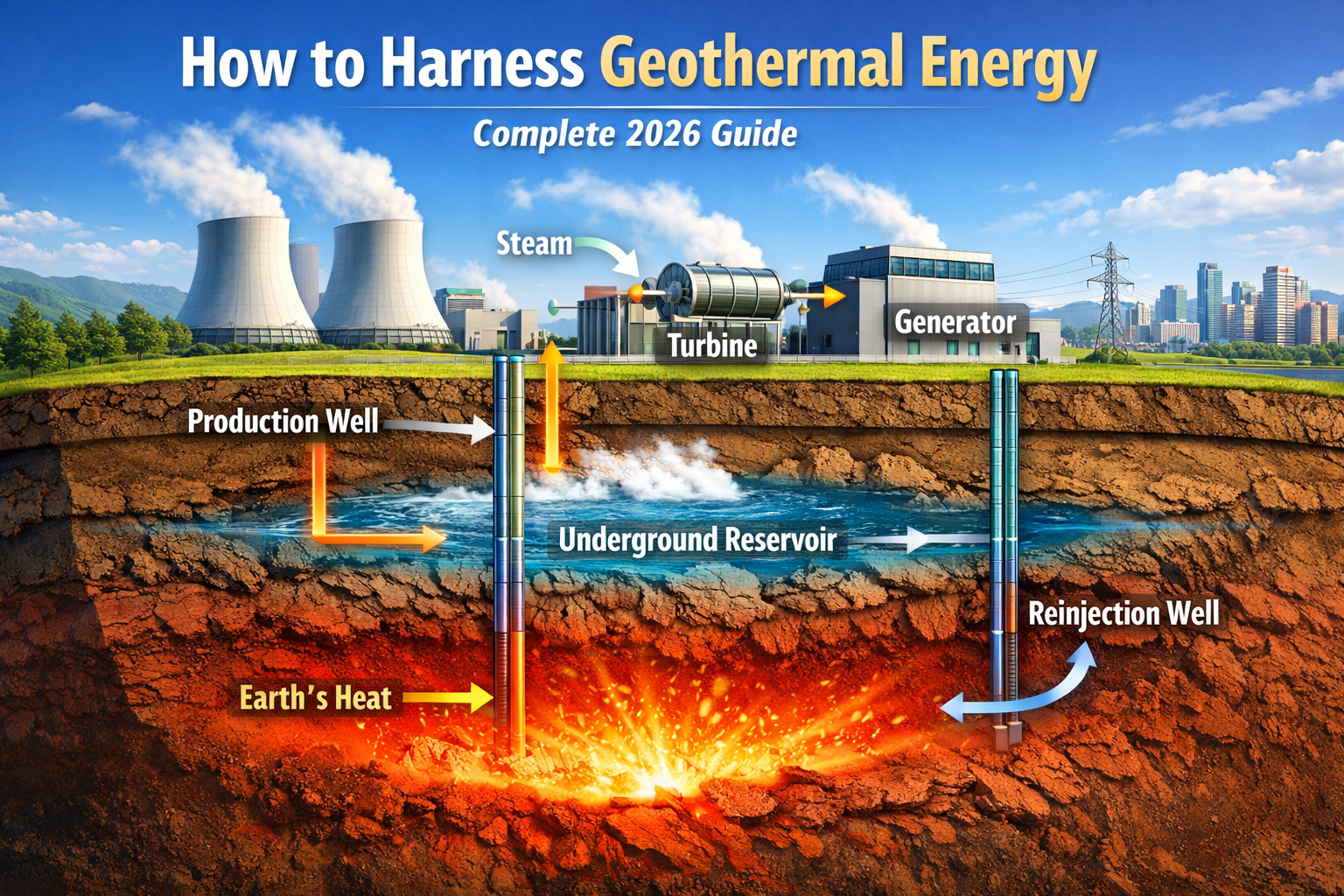
Geothermal energy works by using heat from deep inside the Earth to produce steam or hot water, which spins a turbine connected to a generator to create electricity. The cooled water is then pumped back underground for reheating, creating a continuous, renewable energy cycle.
Geothermal power is steady, clean, and available day and night. In this complete guide, you’ll learn how it works, how we harness it, where it’s used, and why it’s becoming one of the most reliable renewable energy sources in 2026 and beyond.
What Is Geothermal Energy?
Geothermal energy is heat energy generated and stored within the Earth. The word “geo” means Earth, and “thermal” means heat. Together, they describe the natural heat that exists beneath our feet.
Origin of Earth’s Heat
The Earth’s heat comes from two main sources:
- Radioactive decay of elements like uranium, thorium, and potassium occurs inside the Earth’s crust and mantle.
- Residual heat left over from the planet’s formation over 4.5 billion years ago.
Temperatures increase as you go deeper underground. This is known as the geothermal gradient. On average, the temperature rises about 25–30°C for every kilometer you descend into the Earth’s crust.
In certain areas—especially near tectonic plate boundaries—magma rises closer to the surface, creating extremely hot underground reservoirs.
Why Is Geothermal Energy Renewable?
Geothermal energy is considered renewable because:
- The Earth continuously produces heat.
- Water used in power plants is reinjected underground.
- Reservoirs can last for decades when managed properly.
Unlike fossil fuels, geothermal energy does not rely on burning fuel. The heat source is naturally replenished.
Where Is Geothermal Energy Found?
Geothermal resources are most accessible in:
- Volcanic regions
- Tectonic plate boundaries
- Hot spring areas
- Geyser fields
Countries rich in geothermal energy include:
- United States (California, Nevada)
- Iceland
- Philippines
- Indonesia
- Kenya
- New Zealand
However, geothermal heat exists everywhere—some regions require deeper drilling.
How Geothermal Energy Works
Geothermal energy works by tapping underground reservoirs of hot water or steam and using that heat to spin a turbine connected to a generator. The generator converts mechanical energy into electricity. Afterward, the cooled water is reinjected underground, where it heats up again and continues the cycle.
Now let’s break it down step by step.
1. Underground Heat
Deep inside the Earth, temperatures can exceed 300°C (572°F). In geothermal regions, this heat rises close to the surface.
When groundwater seeps into hot rock formations, it becomes superheated, forming high-pressure steam or hot water reservoirs.
2. Reservoir Formation
A geothermal reservoir forms when:
- The heat source (magma) lies beneath.
- Porous rocks allow water storage.
- An impermeable rock layer traps the heated water.
These reservoirs act like natural underground boilers.
3. Steam Production
Engineers drill production wells into the reservoir. The pressure difference allows hot water or steam to rise naturally to the surface.
In some systems, hot water is flashed into steam when pressure drops.
4. Turbine Rotation
The steam flows through pipes and strikes turbine blades.
As the turbine spins, it converts thermal energy into mechanical energy.
5. Generator Process
The spinning turbine connects to a generator. Inside the generator:
- A rotating magnet spins within copper coils.
- This motion produces electricity through electromagnetic induction.
This is the same basic principle used in coal, nuclear, and hydroelectric plants.
6. Reinjection System
After the steam cools and condenses into water, it is pumped back underground through reinjection wells.
This:
- Maintains reservoir pressure
- Prevents depletion
- Sustains long-term energy production
The cycle then repeats.
How Does Geothermal Energy Work (Simple Explanation)
Here’s a beginner-friendly explanation:
- Heat exists under the Earth.
- Water underground gets very hot.
- The hot water turns into steam.
- Steam spins a turbine.
- The turbine creates electricity.
- The water goes back underground.
That’s it. The Earth heats the water again, and the cycle continues.
Simple. Clean. Reliable.
What Are the Steps of Geothermal Energy Production?
- Identify a geothermal reservoir
- Scientists locate underground heat sources using geological surveys.
- Drill production wells
- Wells are drilled to access hot water or steam.
- Extract hot water or steam
- The heat rises to the surface through pipes.
- Spin the turbine
- Steam rotates turbine blades.
- Generate electricity
- The turbine powers a generator.
- Reinject cooled water
- Water returns underground to sustain the cycle.
Numbered processes like this help explain geothermal systems clearly—and reflect how real plants operate worldwide.
What Is Geothermal Energy Used For?
Geothermal energy serves both large-scale and local needs.
Main Uses
- Electricity generation
- Heating homes
- District heating systems
- Greenhouses
- Industrial drying
- Hot water supply
- Aquaculture
- Spa and bathing facilities
Quick Comparison Table
Application Scale Example
Electricity Large-scale Power Plants
Home heating Residential Heat pumps
District heating City-wide Iceland systems
Agriculture Commercial Greenhouses
Industry Manufacturing Food drying
Geothermal energy is versatile. It supports both massive power grids and single-family homes.
Geothermal Energy Flow Chart (Step-by-Step Process Diagram)
Earth’s Heat
↓
Underground Reservoir
↓
Production Well
↓
Steam
↓
Turbine
↓
Generator
↓
Electricity
↓
Reinjection Well
Image Alt Text: “geothermal energy flow chart diagram.”
This simple diagram explains the full energy journey—from Earth’s core to your light switch.
Geothermal Energy Transformation Explained
Geothermal energy undergoes three key transformations:
Thermal Energy → Mechanical Energy → Electrical Energy
Step 1: Thermal Energy
Heat from the Earth warms underground water.
Step 2: Mechanical Energy
Steam spins turbine blades. Motion equals mechanical energy.
Step 3: Electrical Energy
The turbine turns a generator. Electromagnetic induction produces electricity.
Science made simple:
- Heat creates motion.
- Motion creates electricity.
That’s energy transformation in action.
What Is an Example of Geothermal Energy?
Real-world examples prove geothermal works.
The Geysers (USA)
Located in California, The Geysers is the world’s largest geothermal field. It produces electricity for hundreds of thousands of homes.
Iceland District Heating
Nearly 90% of Iceland’s homes use geothermal heating. Hot water is delivered directly to buildings, reducing heating costs dramatically.
Philippines Geothermal Plants
The Philippines ranks among the top global producers of geothermal electricity. It uses volcanic activity to power millions of homes.
Residential Geothermal Heat Pumps
In many countries, homeowners install geothermal heat pumps to regulate indoor temperatures year-round.
These examples show geothermal energy is not experimental—it’s proven.
Who Discovered Geothermal Energy?
Humans have used geothermal heat for thousands of years.
- Ancient Romans used hot springs for bathing.
- Ancient Chinese used geothermal water for heating and therapy.
However, the first industrial geothermal electricity production occurred in 1904 in Larderello, Italy.
Prince Piero Ginori Conti successfully generated electricity using geothermal steam.
That moment marked the birth of modern geothermal power.
Types of Geothermal Power Plants
There are three main types:
1. Dry Steam Plants
- Use steam directly from underground.
- Oldest type.
- Example: The Geysers (USA).
2. Flash Steam Plants
- Hot, high-pressure water is brought to the surface.
- Pressure drop turns water into steam.
- Most common type worldwide.
3. Binary Cycle Plants
- Use moderately hot water.
- Transfer heat to a secondary fluid with a lower boiling point.
- Closed-loop system.
- Very low emissions.
Comparison Table
Type Heat Requirement Efficiency Emissions
Dry Steam Very high High Low
Flash Steam High High Low
Binary Cycle Moderate Moderate Very low
Binary plants expand geothermal use to more regions.
How Geothermal Heat Pumps Work
Geothermal heat pumps use shallow ground temperatures to heat and cool homes.
Unlike power plants, they don’t rely on deep magma heat.
How It Works
- Pipes called ground loops are buried underground.
- Fluid circulates through the pipes.
- In winter, the system absorbs heat from the ground.
- In summer, it transfers heat from the house into the ground.
The Earth stays at a stable temperature a few meters below the surface. Heat pumps use that stability.
Benefits:
- Lower electricity bills
- Reduced emissions
- Long system lifespan
- Quiet operation
For homeowners asking, “Can geothermal be used at home?” — the answer is yes.
Advantages and Disadvantages of Geothermal Energy
Advantages
- Renewable and sustainable
- Low greenhouse gas emissions
- Reliable 24/7 power
- Small land footprint
- Low operating costs
- Long plant lifespan
Disadvantages
- High initial drilling cost
- Location-specific
- Risk of induced seismic activity
- Possible release of underground gases (minimal with modern systems)
Overall, geothermal energy offers a strong balance of reliability and sustainability.
Future of Geothermal Energy
The future looks powerful.
Enhanced Geothermal Systems (EGS)
EGS creates artificial reservoirs by injecting water into hot, dry rock. This expands geothermal access beyond volcanic regions.
Oil Well Repurposing
Old oil wells can be converted into geothermal wells. This lowers infrastructure costs and supports energy transition.
Global Expansion
Countries in Africa, Southeast Asia, and South America are investing heavily in geothermal exploration.
In 2026 and beyond, geothermal is shifting from a niche renewable to a mainstream energy solution.
FAQ Section
How does geothermal energy work?
Geothermal energy works by extracting underground heat to produce steam, which spins a turbine connected to a generator. The cooled water is reinjected underground to sustain the cycle.
What are the steps of geothermal energy production?
Identify reservoir → Drill wells → Extract steam → Spin turbine → Generate electricity → Reinject water.
What is geothermal energy used for?
It is used for electricity generation, home heating, district heating, greenhouses, industrial processes, and hot water supply.
What is geothermal energy transformation?
It is the conversion of thermal energy into mechanical energy and then into electrical energy.
Who discovered geothermal energy?
Ancient civilizations used it first, but industrial geothermal electricity began in 1904 in Italy, when Prince Piero Ginori Conti built the first geothermal power plant.
Final Thoughts
Geothermal energy is steady, powerful, and deeply rooted—literally—in our planet.
When you harness geothermal energy, you tap into a clean heat source that runs day and night. No fuel burning. No weather dependence. Just Earth is doing what it has always done: producing heat.
As technology improves and drilling costs fall, geothermal energy will play a larger role in the global renewable energy mix.