Clean power no longer belongs to the future. It powers homes, offices, and entire cities right now. If you want steady, low-carbon energy that does not depend on sunshine or wind, you need to understand how to harness geothermal energy. This guide explains how to harness geothermal energy in clear steps, from the science beneath your feet to real systems you can install in 2026. You will learn how geothermal works, what it costs, what tools you need, and how to decide if it fits your property or project.
What Is Geothermal Energy?
Geothermal energy comes from heat stored inside the Earth. The planet’s core burns at temperatures hotter than the surface of the sun. That heat moves outward through layers of rock and soil. In some places, it rises close to the surface through hot springs, geysers, and volcanic regions. In other places, the heat stays deep underground, remaining steady year-round.
Unlike solar and wind power, geothermal energy does not depend on the weather. The ground a few feet below the surface maintains a stable temperature year-round. In many regions, temperatures range from 45°F to 75°F. Engineers use this constant heat to warm buildings in winter and cool them in summer.
On a larger scale, power plants tap into underground reservoirs of hot water and steam. They convert that heat into electricity. On a smaller scale, homeowners use ground-source heat pumps to control indoor climate.
Understanding these two main uses is the first step toward harnessing geothermal energy.
How Geothermal Energy Works
Geothermal systems rely on a simple principle. Heat flows from warmer areas to cooler ones. Engineers design systems that move heat in controlled ways.
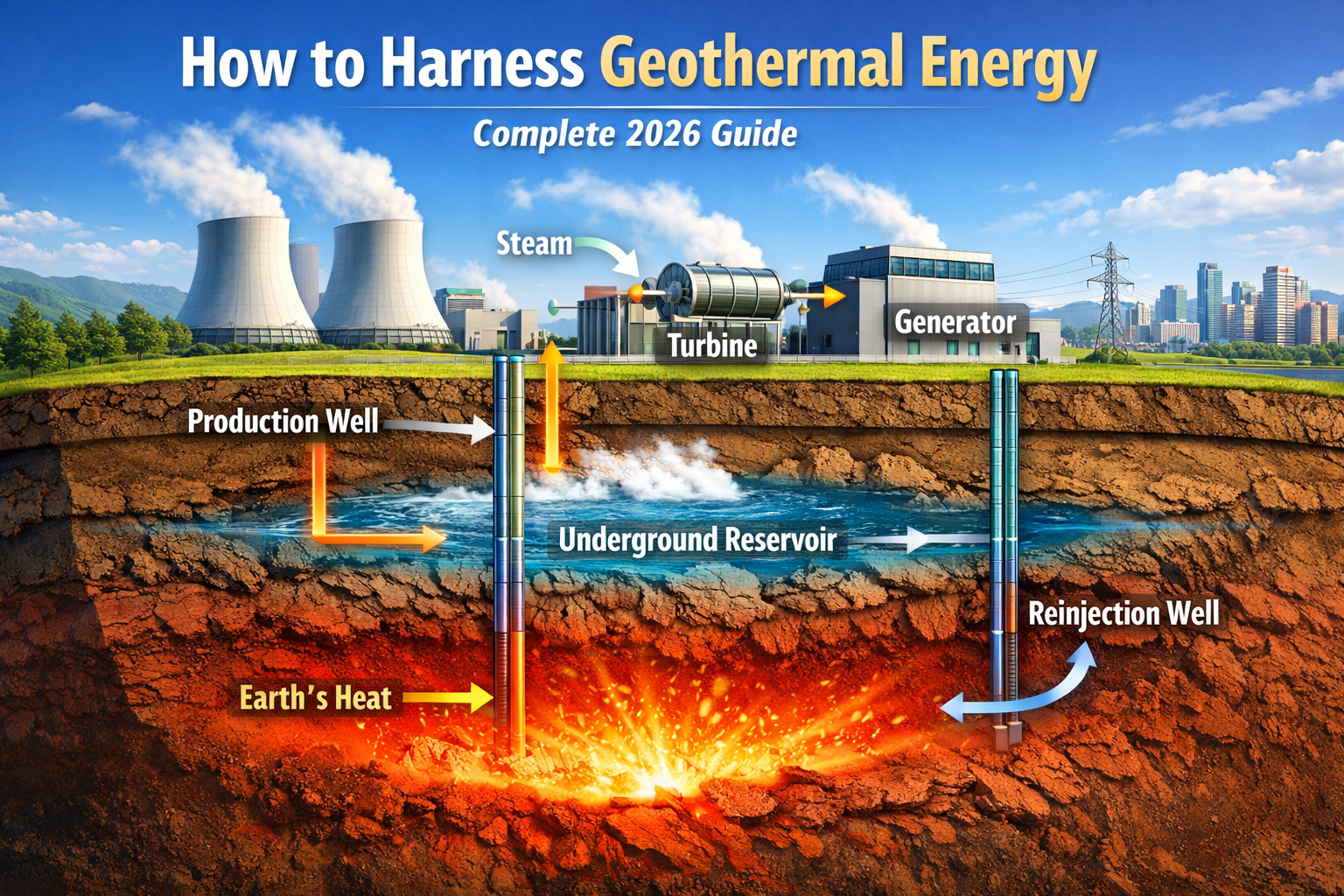
In power generation, wells reach deep underground. They tap into reservoirs filled with hot water or steam. The steam spins turbines. The turbines drive generators. The generators produce electricity. Afterward, the cooled water returns underground to keep the cycle running.
In residential and commercial buildings, geothermal heat pumps work differently. They use buried pipes, known as ground loops. A fluid flows through these pipes. In winter, the fluid absorbs heat from the ground and carries it into the building. In summer, the system reverses direction. It pulls heat from the building and returns it to the cooler ground.
This steady exchange makes geothermal systems highly efficient. They transfer heat rather than creating it by burning fuel.
Types of Geothermal Power Plants
Large-scale geothermal projects fall into three main categories. Each type depends on underground conditions.
Dry steam plants use steam that rises directly from the ground. This steam spins turbines without extra processing. These plants are rare because they require natural steam reservoirs.
Flash steam plants are more common. They pull up high-pressure hot water from deep underground. When the pressure at the surface drops, the water turns into steam. That steam powers turbines.
Binary cycle plants use moderate-temperature water. Instead of spinning turbines directly, the hot water heats a separate fluid with a lower boiling point. That second fluid turns into vapor and drives the turbine. The geothermal water never comes into contact with the turbine system. This design works well in many regions and reduces emissions.
In 2026, binary cycle technology continues to expand because it allows developers to use geothermal resources in more locations.
Types of Geothermal Systems for Homes
Most people who want to learn how to harness geothermal energy start with heating and cooling. Ground-source heat pumps offer the most practical entry point.
Closed-loop systems circulate fluid through sealed underground pipes. Installers place these loops horizontally in trenches or vertically in deep boreholes. Horizontal loops cost less but require more land. Vertical loops fit smaller lots but require deeper drilling.
Open-loop systems use groundwater from a well. The system pumps water through the heat pump and then returns it to the ground. This option works best where groundwater is clean and plentiful.
Pond or lake loops provide another option. If a property includes a suitable body of water, installers can place coils at the bottom of the body of water. The water temperature remains stable, enabling efficient heat exchange.
Each system has its own site requirements. A professional assessment helps determine the best choice.
Step-by-Step: How to Harness Geothermal Energy at Home
Start with an energy audit. This step measures how much heating and cooling your building needs. Seal air leaks. Improve insulation. Efficient buildings require smaller geothermal systems, which lowers installation costs.
Next, contact a certified geothermal installer. They will evaluate soil type, land size, and local climate. They may perform a thermal conductivity test to measure how well your ground transfers heat.
After the evaluation, the installer designs the loop field. They choose horizontal or vertical loops based on available space. Then they drill or trench and lay the piping. Workers connect the loop to the indoor heat pump unit. The system also connects to ductwork or radiant floor systems.
Finally, technicians test the system. They check pressure levels and fluid circulation. Once operational, the system runs automatically. It uses electricity to power the heat pump but delivers several units of heating or cooling for every unit of electricity consumed.
Step-by-Step: How to Harness Geothermal Energy for Electricity
Utility-scale geothermal projects require careful planning and large investment. Developers begin with geological surveys. They study rock formations and underground temperatures. Test wells confirm the presence of usable heat.
Once confirmed, engineers drill production wells and injection wells. Production wells bring hot water or steam to the surface. Injection wells return cooled water underground. This process maintains pressure and supports long-term use.
At the surface, a power plant converts heat into electricity. Operators monitor temperature, pressure, and environmental impact. Modern plants release minimal emissions because they recycle most fluids underground.
Governments often support these projects through incentives and research grants. As drilling technology improves, more regions become suitable for geothermal electricity.
Costs and Financial Considerations in 2026
Geothermal systems require a higher upfront investment than traditional heating systems. A residential ground-source heat pump can cost more than a gas furnace or air conditioner. However, operating costs remain lower.
Homeowners often save 30 to 60 percent on heating and cooling bills. Systems typically last longer than conventional HVAC equipment. Ground loops can last 50 years or more. Heat pump units often last over 20 years.
In many countries, tax credits and rebates help reduce installation costs. In 2026, several regions continue to expand clean energy incentives. These policies shorten payback periods and encourage adoption.
For power plants, costs depend on drilling depth and resource quality. Drilling accounts for a large share of total investment. Once operational, geothermal plants provide stable electricity with low fuel costs because the Earth supplies the heat.
Environmental Benefits and Challenges
Geothermal energy produces low greenhouse gas emissions. It reduces reliance on fossil fuels. It also uses less land than many other power sources.
Ground-source heat pumps reduce local air pollution. They do not burn fuel on-site. They operate quietly and require little maintenance.
However, challenges remain. Drilling can disturb the land during construction. In rare cases, geothermal projects may trigger minor seismic activity. Careful site management and modern engineering reduce these risks.
Water use also requires attention. Power plants must manage fluids responsibly. Closed-loop systems help prevent contamination.
Overall, geothermal energy ranks among the cleanest and most reliable renewable energy sources available today.
Innovations Shaping Geothermal in 2026
Technology continues to expand what is possible. Enhanced geothermal systems, often called EGS, allow engineers to create reservoirs in hot dry rock. They inject water into fractured rock formations and extract the heated fluid. This approach could unlock geothermal energy in regions without natural reservoirs.
Advanced drilling methods reduce costs and enable deeper drilling into heat sources. Improved heat pump designs increase efficiency and reduce electricity use.
Some cities now explore geothermal district heating. Instead of installing individual systems in each building, they connect entire neighborhoods to shared underground loops. This model lowers costs per building and supports large-scale adoption.
These developments make learning how to harness geothermal energy more relevant than ever.
Is Geothermal Right for You?
The answer depends on location, budget, and long-term goals. If you plan to stay in your home for many years, geothermal offers strong financial and environmental benefits. Stable energy prices add another advantage.
If you live in an area with high electricity or fuel costs, savings increase. If your property has enough land or suitable geology, installation becomes easier.
Consult local experts. Ask about soil conditions and available incentives. Compare lifetime costs rather than just the upfront price.
Businesses and institutions often find geothermal especially attractive. Schools, hospitals, and office buildings benefit from predictable energy bills and long equipment life.
Maintenance and Long-Term Performance
Geothermal systems require less maintenance than traditional systems. Heat pumps need regular filter changes and periodic inspections. Ground loops remain sealed and protected underground.
Power plants require professional operation and monitoring. Engineers track performance data to ensure steady output and environmental compliance.
With proper care, geothermal systems deliver decades of reliable service. Their durability adds to their appeal.
The Future of Geothermal Energy
As the world seeks stable and clean energy, geothermal stands out. It provides constant power. It supports energy independence. It reduces emissions without sacrificing reliability.
Learning how to harness geothermal energy equips homeowners, developers, and policymakers with a practical solution for 2026 and beyond. The Earth’s heat remains vast and largely untapped. With improved technology and supportive policies, more communities can benefit from this steady resource.
Geothermal energy does not rely on clear skies or strong winds. It draws on the natural warmth beneath our feet. When you harness it wisely, you gain comfort, savings, and a cleaner energy future.
FAQ Section
How does geothermal energy work?
Geothermal energy works by extracting underground heat to produce steam, which spins a turbine connected to a generator. The cooled water is reinjected underground to sustain the cycle.
What are the steps of geothermal energy production?
Identify reservoir → Drill wells → Extract steam → Spin turbine → Generate electricity → Reinject water.
What is geothermal energy used for?
It is used for electricity generation, home heating, district heating, greenhouses, industrial processes, and hot water supply.
What is geothermal energy transformation?
It is the conversion of thermal energy into mechanical energy and then into electrical energy.
Who discovered geothermal energy?
Ancient civilizations used it first, but industrial geothermal electricity began in 1904 in Italy, when Prince Piero Ginori Conti built the first geothermal power plant.
Final Thoughts
Geothermal energy is steady, powerful, and deeply rooted—literally—in our planet.
When you harness geothermal energy, you tap into a clean heat source that runs day and night. No fuel burning. No weather dependence. Just Earth is doing what it has always done: producing heat.
As technology improves and drilling costs fall, geothermal energy will play a larger role in the global renewable energy mix.